



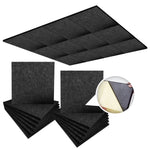
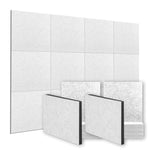



Arrowzoom™ Acoustic Sound Diffuser - Quadratic Skyline - KK1204
Arrowzoom™ Acoustic Sound Diffuser - Quadratic Skyline - KK1204
✅ Scatters mid/high reflections — clearer sound
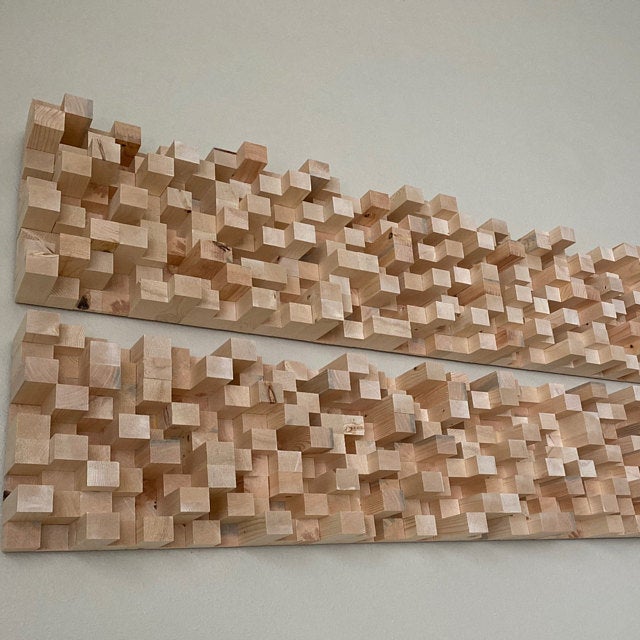
✅ Quadratic skyline — true diffusion math
✅ Keeps the room lively — not dead
✅ Lightweight panels — mount in minutes
Couldn't load pickup availability
-
Ordered
-
Shipped
- - -
At Your Doorstep

Scatter the slap — turn a boxy room into a balanced one
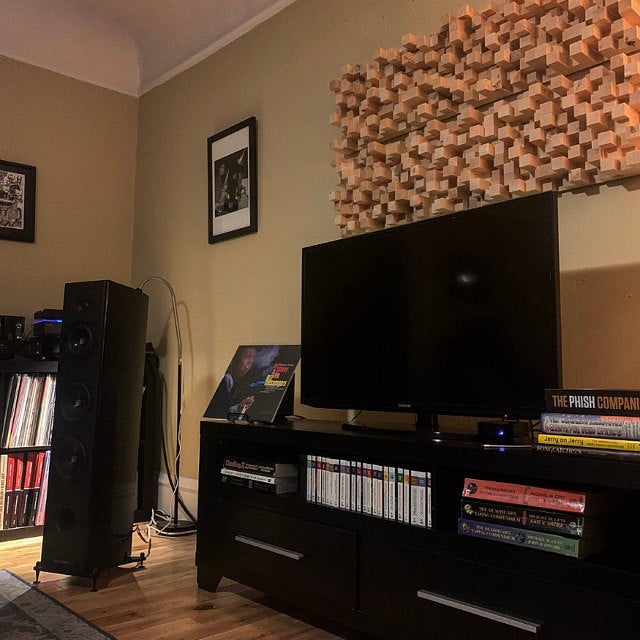
Hard, parallel walls fire reflections straight back at your ears: flutter echo, harsh highs, a stereo image that collapses to the middle. The KK1204 Acoustic Sound Diffuser breaks up those reflections with quadratic skyline geometry, so the room sounds open, even, and natural — without sucking the life out of it. Molded diffusion done right, ready to mount in minutes.
- Scatters reflections — clearer, even room
- Quadratic skyline — true diffusion math
- Keeps the room lively — not dead
- Lightweight panels — mount in minutes
- Backed by Arrowzoom's 100-day guarantee
Diffuser, absorber, or soundproofing? Read this first
Three different jobs. An absorber (foam or mineral wool) soaks energy up — it lowers overall loudness and tames bass buildup. A diffuser like this one scatters reflections evenly so sound arrives natural and lively instead of dead or boomy — it does not reduce loudness. Soundproofing (mass, sealed door kits, decoupled walls) is what blocks noise between rooms. The best-sounding rooms combine them: absorption at first-reflection points, diffusion on the back and rear-side walls. We'd rather you buy the right tool once than return the wrong one.
Specs
| Panel size (typical) | 11.8" × 11.8" | 30 × 30 cm (confirm on your variant) |
| Thickness (typical) | approx. 1.2–2.0" | ~30–50 mm (confirm on live listing) |
| Weight (typical) | lightweight molded panel (confirm on live listing) |
| Material | Molded acoustic diffuser panel |
| Acoustic role | Diffusion / reflection-scattering (Pyramid adds some absorption) |
| Absorption (NRC) | Low by design — a diffuser scatters, it does not absorb (Pyramid: some) |
| Soundproofing (STC) | None — a wall panel does not block sound between rooms |
| Mounting | Adhesive or fixings on clean, solid walls |
| Geometries | Quadratic Skyline (KK1204), Rectangle (KK1096), Quadratic (KK1098), Pyramid (KK1099) |
| Shipping | Free worldwide on orders over $99 |
What's in the box
- KK1204 Acoustic Sound Diffuser panel(s), quadratic skyline geometry
- Mounting guidance card
- Related geometries: KK1096 (Rectangle), KK1098 (Quadratic), KK1099 (Pyramid)
How many do you need? For a rear wall or a feature behind a desk, most rooms start with 4–8 panels in a grid or offset layout. Pair with absorption panels at the first-reflection points beside your speakers for a balanced room.
Mount in 4 steps
- Wipe the wall clean and dry — no dust, no grease.
- Dry-lay your layout on the floor first to lock the pattern.
- Mount with adhesive or fixings suited to the panel and wall.
- Check level, press firmly, and let any adhesive cure. Done.
Made for
Why we're different from cheap printed & plastic diffusers
| Arrowzoom KK1204 | Cheap printed / plastic imitator | |
|---|---|---|
| Geometry | True quadratic skyline diffusion depths | Shallow molded look — little real scatter |
| Build | Consistent molding, clean even cells | Flashing, warps, uneven cells |
| Range | 4 matched geometries for any room | One generic shape, no system |
| Finish | Clean acoustic-grade surface | Plastic sheen, fades and yellows |
| Backed by | 100-day guarantee, 300,000+ customers | No-name, no recourse |
Technical reference — diffusion vs absorption vs soundproofing
Three numbers come up when people shop for acoustic panels. Here's the honest version for a diffuser:
- Diffusion: what this panel actually does. The quadratic skyline geometry scatters reflections in many directions instead of bouncing them straight back. That removes flutter echo and harsh slap while keeping the room lively — it does not make the room quieter.
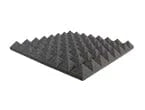
- NRC (Noise Reduction Coefficient): how much a material absorbs. Diffusers are deliberately low-NRC — absorbing is not their job. For comparison, dedicated acoustic foam typically runs around NRC 0.45–0.90 (typical, material-dependent); a diffuser sits well below that by design. The Pyramid geometry (KK1099) offers some absorption alongside scatter, but it is still a diffusion-first product. To reduce loudness, pair with absorption foam or panels.
- STC (Sound Transmission Class): how much a full wall assembly blocks between rooms. STC describes the wall (studs, mass, insulation), not a panel on it — so no diffuser, ours included, carries a meaningful STC rating. To block noise between rooms, use door seal kits and soundproofing.
Honest answer: this panel's job is diffusion — scattering reflections so your room sounds clearer, wider, and more natural. If your goal is to reduce loudness, add absorption foam/panels; if it's to block noise between rooms, add door/wall soundproofing kits. Buy the right tool and you won't be back to return it.
Put these on your wall. If they don't deliver the look and the acoustic clarity you wanted — send them back within 100 days for a full refund. Backed by 300,000+ Arrowzoom customers across acoustic treatment, soundproofing, and studio gear.
Frequently asked
Click any question to expand ↓
Will this soundproof my room?
No — and we'd rather tell you straight. This is a diffuser: it scatters reflections so the room sounds clearer and more natural. It does not block noise from passing through walls and it does not lower overall loudness. To stop sound moving between rooms, look at our door seal kits and soundproofing panels.
Will it make my room quieter?
Not by itself. A diffuser scatters sound, it doesn't absorb it, so it won't drop the volume. To reduce loudness and tame bass, pair it with absorption foam or panels. The Pyramid geometry (KK1099) gives a little absorption too, but diffusion plus dedicated absorption is what gives a room that pro, controlled sound.
Which geometry should I pick?
KK1204 Quadratic Skyline and KK1098 Quadratic give broad, even scatter for studios and listening rooms. KK1096 Rectangle is a cleaner, more linear look. KK1099 Pyramid scatters and adds some absorption — a good all-rounder. Pick by room and the look you want.
What size and weight are the panels?
Typical panels in this range are about 11.8" × 11.8" (30 × 30 cm), roughly 1.2–2.0" (~30–50 mm) deep, and lightweight. Confirm the exact size and weight on the variant you select before you plan your layout (confirm on live listing).
How do I mount these?
On a clean, solid wall use mounting adhesive or fixings suited to the panel and surface. These are lightweight, so adhesive often works well. Dry-lay the layout first, check level, and let any adhesive cure before walking away.
Where should I place diffusers in a room?
Most rooms benefit from diffusion on the rear wall behind the listening position, and sometimes rear-side walls. Keep absorption at the first-reflection points beside your speakers. A common start is 4–8 panels across the back wall, then adjust by ear.
Can I mix geometries?
Yes — many rooms look and sound great with a mix. Scatter is what matters, so combining Quadratic Skyline, Rectangle, Quadratic, and Pyramid panels works fine and adds visual interest. Keep the overall coverage balanced left-to-right.
How fast do they ship?
Handling is 1–2 business days from our warehouse. Standard shipping arrives in 7–14 days to the US and most countries; express shipping in 7 days or less. Free shipping worldwide on orders over $99.
What if they're not right for my room?
Send them back within 100 days for a full refund. No interrogation. Arrowzoom has served 300,000+ customers and the guarantee is the whole point.
Shipping & Returns
Shipping & Returns
Purchase over $99USD or more to get FREE Shipping.
Normal Shipping
- 1-2 weeks in your hands
Express Shipping
- 1 week or less in your hands
Returns Policy
- We accept returns under specific conditions. Please follow these guidelines:
- How to Initiate a Return: Email service@arrowzoom.com with your name and order number.
- No Refunds for Buyer’s Remorse: Ensure your order details (design, size, address) are correct before purchasing.
- Cancellation Fee: Orders canceled (shipped or not) incur a 15% fee due to production costs.
Returned Parcels:
- Reshipping requires you to pay the shipping fee.
- For wrong items or quality issues, we refund the product value minus a 50% restocking fee.
- Shipping costs are non-refundable.
Return Conditions:
- Items must be in new, unaltered condition.
- Returns for mistaken shipments must be approved within 3 working days of receipt.
- Requests must be made within 2 weeks of shipping.
Note: No credit is given for items damaged during shipping. Contact the shipping company for compensation.


Soundproofing FAQs
Frequently Asked Questions
How do I soundproof my wall against noisy neighbours? 🤫
How do I soundproof my wall against noisy neighbours? 🤫
Soundproofing aims to prevent sound from entering or leaving a room, like blocking noise from those pesky neighbours. For more tips, check out our guide on soundproofing against noisy neighbours! 📖
How many Acoustic Panels Do I Need?
How many Acoustic Panels Do I Need?
The first step is going to be installing acoustic panels on your walls. These reduce the reverberations and echoes in the space.
Use our Free Tiles Calculator to find out
How do you install soundproofing? 🔧
How do you install soundproofing? 🔧
There are two main options for installing our DIY soundproofing solutions, and we're here to support you every step of the way!
DIY Installation:
All of our systems are DIY-friendly, saving you on installation costs.
80% of customers install the systems themselves because we’ve made it easy!
We provide simple, step-by-step installation guides and videos for a hassle-free experience.
Our technical team is ready to answer any questions and offer support. We're here for you! 🤗
Use a Local Contractor:
You're on your way to a noise-free home! If DIY isn’t an option, consider hiring a local tradesperson.
We simplify the process by communicating directly with your tradesperson throughout the installation.
Visit our installation page for more details! 📞
What's the difference between impact and airborne noise? 🔊
What's the difference between impact and airborne noise? 🔊
1. Airborne Noise
- This travels through the air, like conversations, TV sounds, or barking dogs. When sound waves hit a building, they cause it to vibrate, transmitting through the structure.
2. Impact Noise
- This results from physical impacts on buildings, such as footsteps, slamming doors, or moving furniture. Impact noise can be harder to isolate, as these vibrations are stronger and travel further through dense materials.
What are decibels? 📏
What are decibels? 📏
Decibels are measured logarithmically (not as a percentage) . This means that every increase of 10dB on the scale is a tenfold increase in sound pressure level (SPL) . Near silence is 0dB 🤫, while a sound at 10dB is ten times louder!
- 30-40 dB = Soft music, whisper 🎶
- 60-80 dB = Office noise, traffic 🚗
- 85-100 dB (HARMFUL) = Subway, shouted convo, chainsaw ⚠️
- 100-140 dB (DANGEROUS) = Chainsaw, loud concert, racing, shooting range 🚨
Is everything in stock and ready to ship? 📦
Is everything in stock and ready to ship? 📦
In stock, ships in 1-2 business days! Learn More
Where Is My Order?
Where Is My Order?
Track your order: Check your email or visit our Tracking Page.
FREE & FAST GLOBAL SHIPPING 🚚
30 DAYS RETURNS ✅
24/7 Live Support 📞
FREE & FAST GLOBAL SHIPPING 🚚
30 DAYS RETURNS ✅
24/7 Live Support 📞
FREE & FAST GLOBAL SHIPPING 🚚
30 DAYS RETURNS ✅
24/7 Live Support 📞
FREE & FAST GLOBAL SHIPPING 🚚
30 DAYS RETURNS ✅
24/7 Live Support 📞
FREE & FAST GLOBAL SHIPPING 🚚
30 DAYS RETURNS ✅
24/7 Live Support 📞
FREE & FAST GLOBAL SHIPPING 🚚
30 DAYS RETURNS ✅
24/7 Live Support 📞
FREE & FAST GLOBAL SHIPPING 🚚
30 DAYS RETURNS ✅
24/7 Live Support 📞
FREE & FAST GLOBAL SHIPPING 🚚
30 DAYS RETURNS ✅
24/7 Live Support 📞
FREE & FAST GLOBAL SHIPPING 🚚
30 DAYS RETURNS ✅
24/7 Live Support 📞
FREE & FAST GLOBAL SHIPPING 🚚
30 DAYS RETURNS ✅
24/7 Live Support 📞
FREE & FAST GLOBAL SHIPPING 🚚
30 DAYS RETURNS ✅
24/7 Live Support 📞
FREE & FAST GLOBAL SHIPPING 🚚
30 DAYS RETURNS ✅
24/7 Live Support 📞


