
Mikey Scott Studio Tests Arrowzoom Acoustic Foam in a Real Living Room

Mikey Scott Studio Tests Arrowzoom Acoustic Foam in a Real Living Room

A Controlled Recording Test

How much difference can a movable acoustic panel make to a guitar recording?

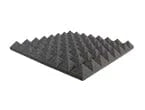
Mikey Scott Studio put the Arrowzoom Pyramid PRO Acoustic Foam (KK1471) to the test in a living room—a realistic domestic space without the acoustic treatment already installed in his studio.

The goal was to compare how the recording sounded without the panel and with it in place, focusing on room reflections, clarity, body and the overall recorded sound.

The Review

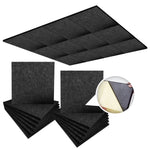
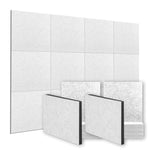
For the test, Mikey built a 3 ft × 4 ft double-sided movable panel using 24 Arrowzoom Pyramid PRO acoustic foam tiles. Each tile measured 25 × 25 × 15 cm—or 10 × 10 × 6 inches.

He then recorded the same four acoustic-guitar chords in two separate takes:

  1. Without the Arrowzoom acoustic panel
  2. With the Arrowzoom acoustic panel

To make the comparison as consistent as possible, Mikey used the same acoustic guitar, microphone and gain settings. He also kept the playing and recording positions consistent, making the movable acoustic panel the only deliberate change to the setup.

This practical demonstration allows listeners to compare both versions directly and decide how the panel changes the sound for themselves. Headphones are recommended to hear the differences more clearly.

Why It Stands Out

  • Designed for practical DIY treatment: Mikey used 24 tiles to build a double-sided movable panel.
  • Flexible placement: The freestanding design can be positioned where it is needed instead of becoming a permanent wall installation.
  • Demonstrated through a controlled test: The guitar, microphone, gain and recording positions remained consistent while only the panel changed.

Exclusive Discount

Get 10% OFF store-wide at Arrowzoom with code AZ-MIKEY.

Explore Arrowzoom

Ready to improve your recording space? Explore the Arrowzoom website to discover the Pyramid PRO Acoustic Foam (KK1471) and more acoustic-treatment solutions for studios, creative spaces and home setups.

Back to blog

Soundproofing FAQs

Frequently Asked Questions

check_box

How do I soundproof my wall against noisy neighbours? 🤫

Soundproofing aims to prevent sound from entering or leaving a room, like blocking noise from those pesky neighbours. For more tips, check out our guide on soundproofing against noisy neighbours! 📖

check_box

How many Acoustic Panels Do I Need?

The first step is going to be installing acoustic panels on your walls. These reduce the reverberations and echoes in the space.

Use our Free Tiles Calculator to find out

check_box

How do you install soundproofing? 🔧

There are two main options for installing our DIY soundproofing solutions, and we're here to support you every step of the way!

DIY Installation:

All of our systems are DIY-friendly, saving you on installation costs.

80% of customers install the systems themselves because we’ve made it easy!

We provide simple, step-by-step installation guides and videos for a hassle-free experience.

Our technical team is ready to answer any questions and offer support. We're here for you! 🤗

Use a Local Contractor:

You're on your way to a noise-free home! If DIY isn’t an option, consider hiring a local tradesperson.

We simplify the process by communicating directly with your tradesperson throughout the installation.

Visit our installation page for more details! 📞

check_box

What's the difference between impact and airborne noise? 🔊

1. Airborne Noise

  • This travels through the air, like conversations, TV sounds, or barking dogs. When sound waves hit a building, they cause it to vibrate, transmitting through the structure.

2. Impact Noise

  • This results from physical impacts on buildings, such as footsteps, slamming doors, or moving furniture. Impact noise can be harder to isolate, as these vibrations are stronger and travel further through dense materials.

check_box

What are decibels? 📏

Decibels are measured logarithmically (not as a percentage) . This means that every increase of 10dB on the scale is a tenfold increase in sound pressure level (SPL) . Near silence is 0dB 🤫, while a sound at 10dB is ten times louder!

  • 30-40 dB = Soft music, whisper 🎶
  • 60-80 dB = Office noise, traffic 🚗
  • 85-100 dB (HARMFUL) = Subway, shouted convo, chainsaw ⚠️
  • 100-140 dB (DANGEROUS) = Chainsaw, loud concert, racing, shooting range 🚨
check_box

Is everything in stock and ready to ship? 📦

In stock, ships in 1-2 business days! Learn More

check_box

Where Is My Order?

Track your order: Check your email or visit our Tracking Page.


FREE & FAST GLOBAL SHIPPING 🚚

30 DAYS RETURNS ✅

24/7 Live Support 📞

FREE & FAST GLOBAL SHIPPING 🚚

30 DAYS RETURNS ✅

24/7 Live Support 📞

FREE & FAST GLOBAL SHIPPING 🚚

30 DAYS RETURNS ✅

24/7 Live Support 📞

FREE & FAST GLOBAL SHIPPING 🚚

30 DAYS RETURNS ✅

24/7 Live Support 📞

FREE & FAST GLOBAL SHIPPING 🚚

30 DAYS RETURNS ✅

24/7 Live Support 📞

FREE & FAST GLOBAL SHIPPING 🚚

30 DAYS RETURNS ✅

24/7 Live Support 📞

FREE & FAST GLOBAL SHIPPING 🚚

30 DAYS RETURNS ✅

24/7 Live Support 📞

FREE & FAST GLOBAL SHIPPING 🚚

30 DAYS RETURNS ✅

24/7 Live Support 📞

FREE & FAST GLOBAL SHIPPING 🚚

30 DAYS RETURNS ✅

24/7 Live Support 📞

FREE & FAST GLOBAL SHIPPING 🚚

30 DAYS RETURNS ✅

24/7 Live Support 📞

FREE & FAST GLOBAL SHIPPING 🚚

30 DAYS RETURNS ✅

24/7 Live Support 📞

FREE & FAST GLOBAL SHIPPING 🚚

30 DAYS RETURNS ✅

24/7 Live Support 📞